You are not the same every day, and here is why. This first post in a short series will help you get to know the female hormonal cycle, also called the Infradian rhythm.
“Infradian” comes from Latin: “infra” means beyond, “dian” means day. It describes patterns that last longer than a day. The menstrual cycle is longer than a day, so it is an Infradian rhythm.
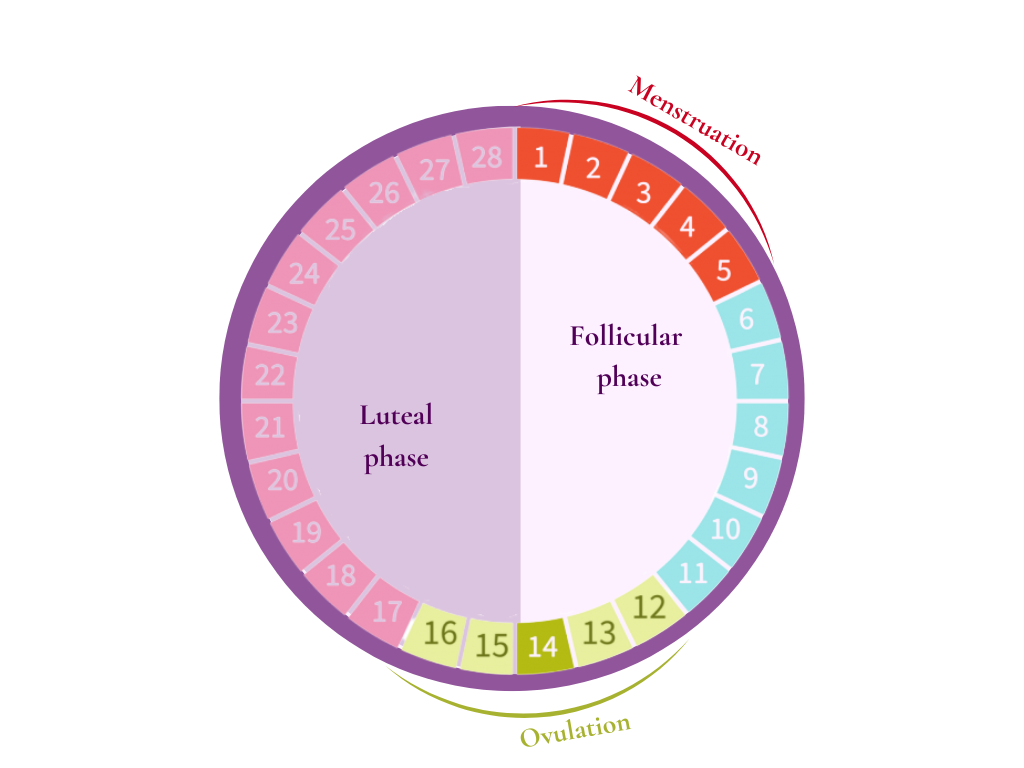
Day 1 is the first day of red bleeding. Brown spotting before that is not Day 1. The cycle ends the day before the next red bleeding begins.
Many people quote 28 days, but that is a simple average, not a rule. A healthy cycle can be 24 to 35 days. Small changes are normal. For example, a cycle can be 32 days, then 34, then 30. It is still normal if the change from one cycle to the next is not more than eight days.

In a healthy cycle, ovulation happens about 12 to 16 days before the next period. This is why “ovulation is on day 14” is only a guess based on averages. Some people will ovulate earlier or later. You can still use day 14 as a learning example, as long as you know it is only a model.
The cycle has two large phases.
These hormones shape mood, hunger, social needs, activity level, and daily life.
When we look closer, we can easily separate four different phases in our cycle:
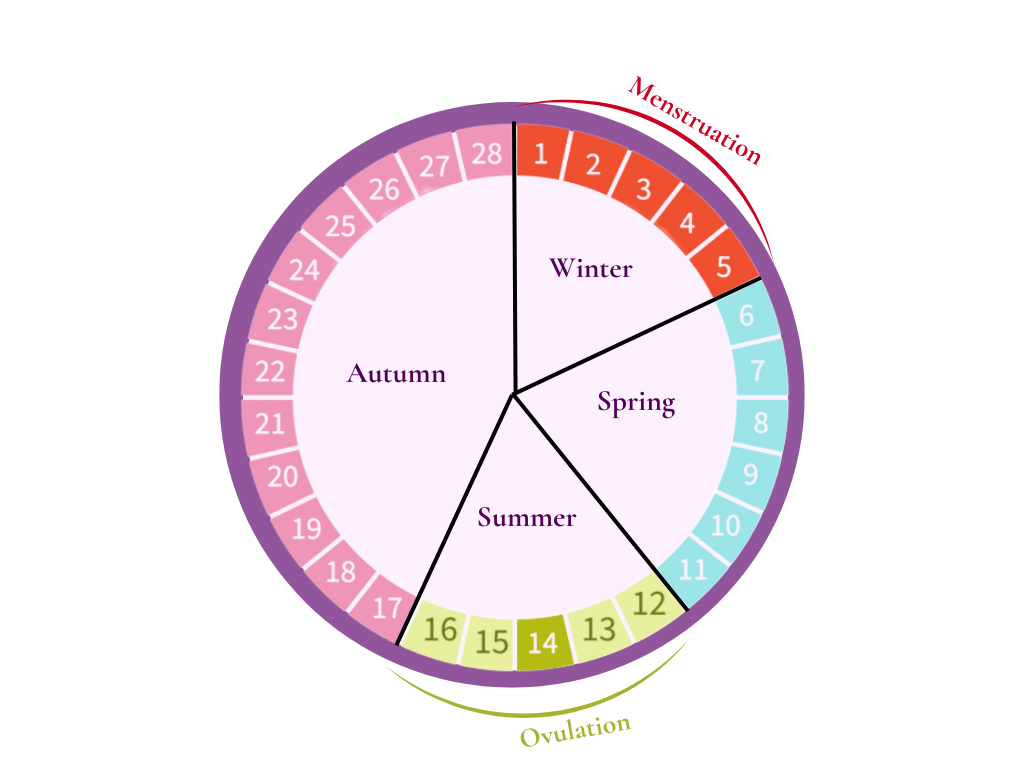
At the start of bleeding, hormone levels are low. Energy is lower. You may prefer quiet, warmth, and rest. Gentle care supports you in this time.
As bleeding ends and estrogen rises, energy grows. Many people feel lighter, less hungry, and more social. This is a good time for new tasks and learning.
Close to ovulation, estrogen and testosterone reach their peaks. Many feel strong, confident, and very social. After ovulation you may still feel good for a few days, then energy starts to soften.
Progesterone rises. You may want cozy time and smaller groups. Hunger can increase, and many reach for more carbs. Focused work and creative projects often feel good here. As progesterone drops, bleeding begins and the cycle starts again.
Your cycle is a monthly rhythm that moves through seasons. You are not the same every day, and that is normal. In the next post, we will look at each season in more detail, with simple ways to support your body and mind in each phase.